I have offered courses in political theory, international studies, and conflict/peace studies. Below are brief sample course descriptions. For syllabi and evaluations, please contact me at jl19@middlebury.edu.
100-Level | Authority & Rule: Introduction to Political Theory
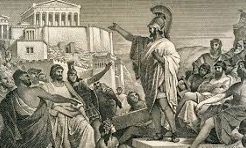
What is the source of political authority? Should the powerful rule? Should the wise? Should the good? Should “the people” rule? What justifies political rule, and what are its limits? Does politics need the idea of rulership at all? This course provides a broad introductory survey of these timeless questions of political theory. Engaging writings of several canonical political thinkers on ancient democracy, republicanism, and modern mass politics, the course will identify and analyze nuances and complexities that lie in political power, authority, and rulership.
100-Level | Introduction to International/Global Studies

How are people’s lives shaped by global processes? In this course we will discuss the various global structures and practices—cultural, political, economic, and social—that affect how people live in and experience the world around them. Topics include the division of the world into sovereign states, the role of international institutions, global economic and financial rules, militaries and police power, transnational resistance movements, and cultural products that challenge traditional national boundaries. We will look at how these structures and practices evolved over time, how they both stabilized the global order and marginalized certain voices, and how they have influenced the choices and agency of different people across borders.
100-Level | Introduction to International Politics
How do we characterize international politics? Is it a system of international anarchy, a cooperative society of states, or a fully integrated world community? What causes conflict or cooperation among states? What can and should states and other international entities do to create and sustain world peace? How do we explore international politics as an academic inquiry? These are among the issues the study of international politics addresses. This course examines the forces that shape relations among states and between state and non-state actors and the key assumptions that affect the scholarly and practical orientations toward aspirations for and critiques of world peace.
200-Level | Political Authority: 19th- and 20th-Century Political Thought

This course surveys some of the most influential political thinkers of the nineteenth and twentieth centuries. It traces the growing skepticism of theorists on both the Left and Right towards the “Enlightenment project,” the idea that technological advance, open markets, rational administration, and more inclusive education would ultimately dissipate the primary sources of political conflict, making way for a harmonious—and secular—society that had less and less need for the “social glue” of religion.
200-Level | Human Rights in Global Politics
Political Theory version
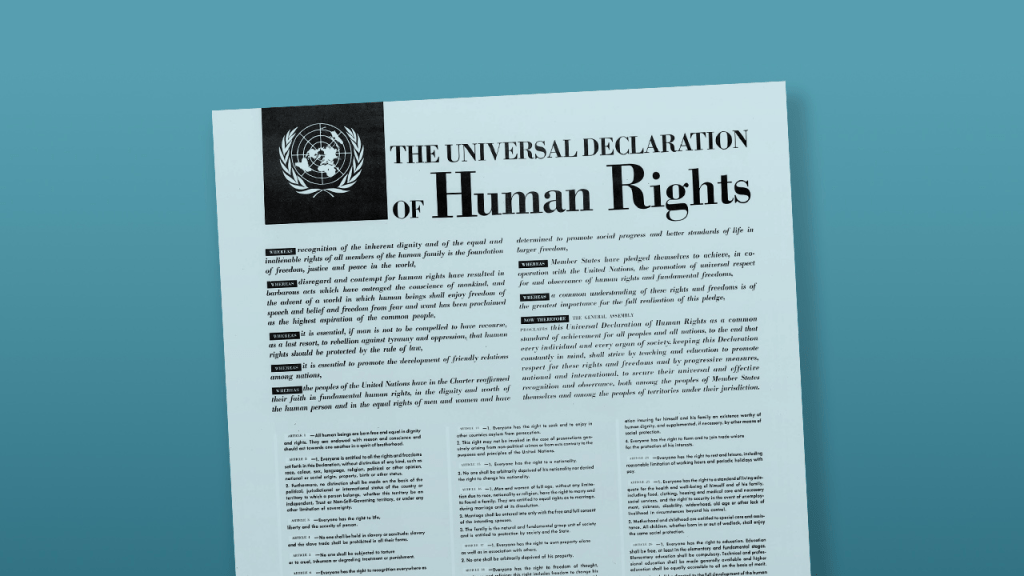
Human rights have become a dominant topic of discourse in contemporary politics. However, their status has remained contested, raising questions such as these: What is a right, and what is a human right? How do we justify human rights, and are these justifications philosophically sound? How extensive should rights be? This class examines the origins, content, and scope of human rights and considers their political value and challenges to their application. We are concerned primarily with analyzing the normative character of human rights, although in the latter part of the semester, we discuss some issues in particular contexts. While surveying different conceptions of human rights, the course also introduces ancient and modern political theories (including those of Plato, Aristotle, Aquinas, Hobbes, Locke, Rousseau, Kant, Mill, and Marx) and explains their relevance to human rights discourse.
International Relations version
Does the pursuit of human rights promote world peace or generate conflict? In this course we will investigate the status of human rights in global politics. We will examine theoretical arguments about the universality of human rights, the dominance of liberal human rights regimes, and the compatibility of restorative justice and human rights. We will discuss contested cases such as the “Asian Values” critique of human rights, the Responsibility to Protect (against mass atrocities) doctrine, and the work of Truth and Reconciliation commissions. Through the course, students will acquire the skills needed to analyze the impact of human rights on political actors in the international arena.
200-Level | Global Ideologies: Colonialism, Imperialism, and Nationalism

The course investigates major issues and debates associated with such modern political ideologies as colonialism, imperialism, nationalism, and totalitarianism. The key questions that will be raised are (a) whether the colonized ought to adopt violence as a method of resistance to colonial wrongs and (b) whether nationalism is a necessary path toward emancipation from imperialist domination. After addressing these theoretical issues, we will turn to a specific topic in political ideology that contemporary politics is facing: radical Islamism.
200-Level | Contemporary Peacebuilding
Although the Cold War ended in 1989, civil wars and genocides have continued to erupt across the globe, and millions still struggle to survive amid crushing poverty. At the same time, we have witnessed the rise of sophisticated civil society networks and social movements addressing these challenges, along with the development of institutions such as truth commissions and international tribunals dedicated to achieving justice and peace in the aftermath of political violence. This course offers an overview of key issues involved in making and sustaining peace. We will examine a range of cases, including Israel and Palestine, Bosnia and Herzegovina, and South Africa.
300-Level | Seminar: Political Violence and Global Order
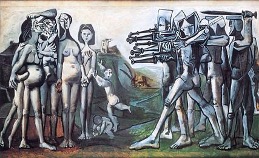
This course addresses the issue of violence in politics through critical engagements with the writings of political theorists. Topics to be covered include the nature of political evil, the features of political action, the effect of war on politics, the roots of racial violence, the Just War ethic, the significance of partisan warfare, the status of violence in decolonization, and avenues to international peace. In addition to active class participation, students are required to write a term paper on a topic of their choice.
Courses in Preparation
200-Level | Global Citizenship
200-Level | Beyond Orientalism: Global Political Theory
300-Level | Seminar: God in Global Politics: Religion, Resistance, and Reconciliation
300-Level | Seminar: Visions of Peace: East Asian Thinkers
 Shinkyu Lee